
Stop Building Features Nobody Actually Needs
A strange thing happens in many software teams.

A feature request appears.
Everyone gets excited.
The roadmap grows.
Engineers start designing solutions.
And almost nobody stops to ask:
“Do we actually know this problem is real?”
One of the most uncomfortable ideas I found in The Mom Test is this:
People are very good at giving encouraging feedback.
And very bad at telling you the truth.
Especially when your idea is involved.
That changes how you think about product development completely.

The Dangerous Trap of “Good Feedback”
When someone says:
“That sounds useful.”
“I’d definitely use that.”
“Great idea.”
it feels like validation.
But most of the time, it’s just politeness.
The hard reality is:
Compliments are not evidence.
Real evidence looks different.
Real evidence is:
existing pain
messy workflows
expensive manual work
repeated frustration
money already being spent solving the problem
That’s where useful product signals actually live.
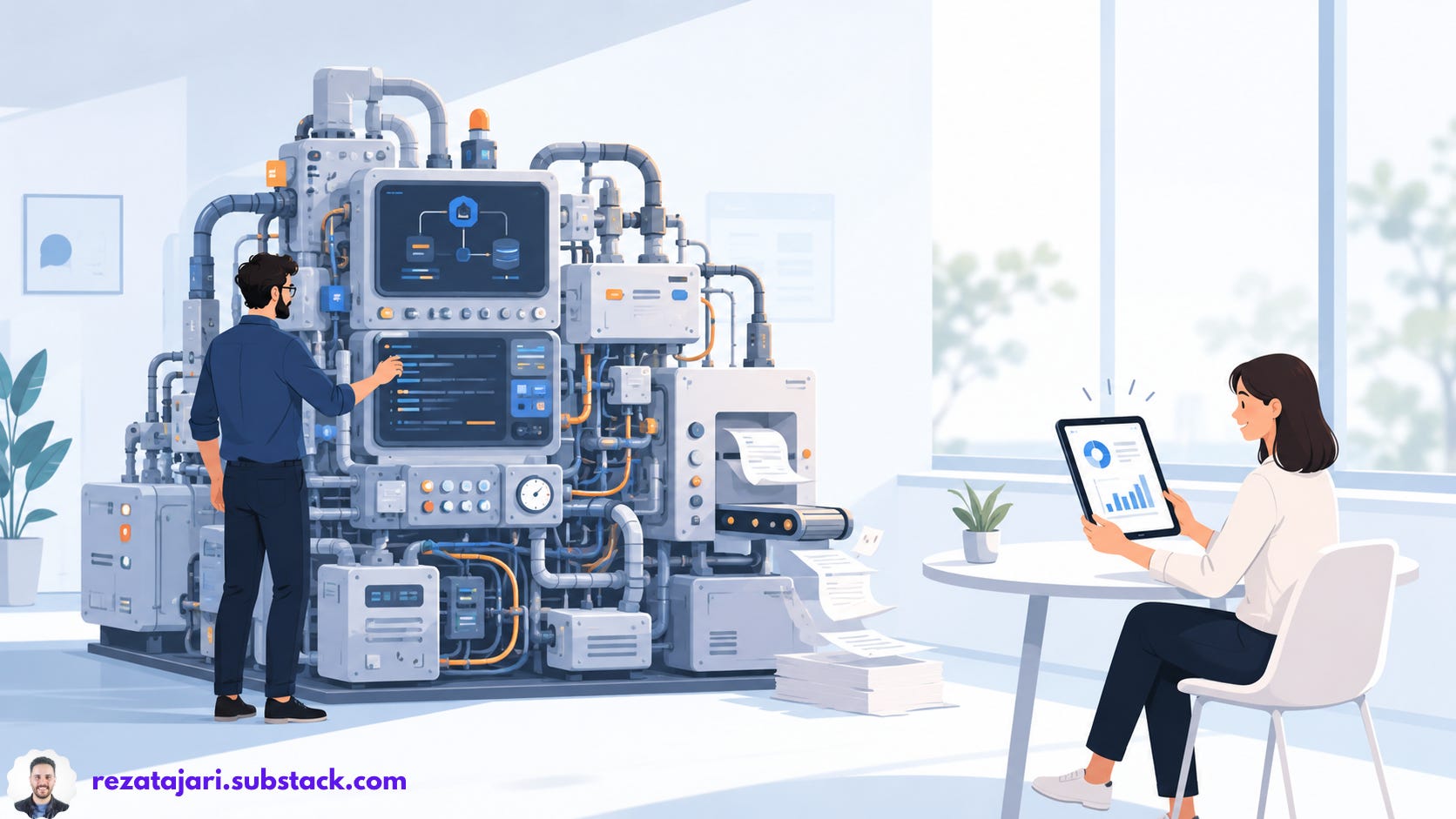
Engineers Often Build Solutions Too Early
One of the biggest mistakes technical teams make is jumping into implementation before understanding motivation.
Someone asks for:
“We need an Excel export button.”
So the team starts designing export infrastructure.
But if you dig deeper and ask:
“What does the export actually help you do?”
you sometimes discover the real problem is much smaller.
Maybe they only need:
a weekly summary
a printable report
or a simple dashboard screenshot for management
The original request was just their attempted solution.
Not the actual need.
That distinction can save months of engineering time.
Future Promises Are Usually Fiction
Another painful lesson:
People are terrible at predicting future behavior.
If you ask:
“Would you use this feature?”
you’ll usually get optimistic answers.
Instead, better questions sound like:
“Tell me about the last time this problem happened.”
“How are you solving it today?”
“What workaround are you currently using?”
Past behavior contains truth.
Hypothetical future behavior usually contains imagination.
That single shift changes the quality of conversations dramatically.
Strong Product Engineers Listen Differently
A product-minded engineer is not just someone who writes code.
They investigate reality.
That means learning to:
ask better questions
avoid pitching too early
listen without defending the idea
notice emotional signals
identify real pain instead of surface requests
Ironically, the less you try to “sell” your idea,
the more honest information people give you.
Not Every Request Deserves a Roadmap Slot
This was another important mindset shift for me.
Many requests create the illusion of momentum.
Meetings happen.
People sound interested.
Feedback looks positive.
But nothing concrete ever moves forward.
In The Mom Test, this is close to what you’d call a false lead.
Real interest usually requires commitment.
Not compliments.
Commitment looks like:
giving time
introducing stakeholders
sharing internal workflows
allocating budget
agreeing to deeper collaboration
Without commitment, many “opportunities” are just conversations.
Technical Validation Matters Too
What makes this idea powerful is that it also applies internally.
Even technical proposals can become fantasy-driven.
A team might want:
a massive refactor
a new architecture
a trendy framework
a complete tooling migration
But before changing systems, the same question matters:
“Where is the actual pain?”
If nobody has built workarounds for the current problem,
the pain probably isn’t strong enough yet.
That’s an uncomfortable truth many engineering teams ignore.

The Best Teams Learn Fast
The strongest teams are not the ones that predict perfectly.
They’re the ones that reduce uncertainty quickly.
Small conversations.
Fast validation.
Short feedback loops.
Continuous adjustment.
Because modern product development is less about certainty —
and more about learning faster than your assumptions fail.
Final Thought
One of the biggest lessons from The Mom Test is this:
Your roadmap should not be built from compliments.
It should be built from evidence.
Real workflows.
Real frustrations.
Real behavior.
Real commitment.
Otherwise, engineering slowly becomes a very expensive machine for building things nobody truly needed.