
Strategic Communication Framework
Navigating Organizational Politics and Stakeholder Collaboration


1. The Foundation of Real Collaboration: HRT
In real engineering teams, being technically strong is just the baseline.
What actually multiplies your impact is how well you work with people.
You can be brilliant, but if collaboration is weak, your impact drops.
Engineers who understand team dynamics often get more done with the same effort.
This is where “soft skills” stop being soft.
They become practical.
A simple way to think about it is through three pillars:
Humility, Respect, and Trust (HRT).
Humility → accepting you don’t know everything
Respect → valuing others’ experience and perspective
Trust → believing others can do their job well
Without trust, everything turns into micromanagement
and that kills both speed and motivation.
Turning This Into Real Behavior
These ideas only matter if they show up in how you act:
Shift from “me” to “we”
Focus on system success, not personal visibilityStay open to being wrong
Better data should change your mindDon’t tie your identity to your code
Feedback improves the system, not attacks youSay “I don’t know” when needed
It builds trust, not weakness
When these behaviors become normal:
you don’t just have skilled individuals —
you get a team that can handle real complexity.

2. The “Genius Myth” and Why Working Alone Fails
There’s a common belief in tech:
the “lone genius” who disappears and comes back with something brilliant.
In reality, that’s mostly fiction.
Even systems like Linux evolved through collaboration.
Working alone may feel productive, but it creates risk:
No feedback → more blind spots
Low visibility → hidden mistakes
Single point of failure → fragile system
Isolation doesn’t create better systems.
It creates undetected problems.
What Actually Breaks in Solo Work
Knowledge stays in one person’s head → project risk increases
Feedback is delayed → mistakes live longer
“Perfect but useless” solutions → misalignment with reality
Slow problem-solving → getting stuck for days
In a collaborative system, these issues reduce naturally.
The Bus Factor
How many people can disappear before your project breaks?
If the answer is one, you have a structural problem.
Quick Self-Check
Can the system run if one key person leaves?
Is knowledge shared or isolated?
Are decisions documented or just remembered?
Is work reviewed or done in isolation?
Shared knowledge = faster and safer teams.
3. Building a Team Culture That Sustains Itself
Culture isn’t something you define once.
It’s something that evolves every day.
Early team members shape it
new members either adapt to it or change it.
If the foundation is strong → culture stabilizes
If not → culture drifts
That’s why culture is everyone’s responsibility, not just the manager’s.
Hiring Shapes Culture
A strong culture filters people automatically.
Focus on:
Not just technical skill
A difficult person can damage the whole teamAdaptability
Can they change their mind?Collaboration ability
How they think matters more than what they know
Decision-Making Matters
Top-down decisions create bottlenecks.
Strong teams move toward shared decision-making:
Engineers have a voice
Ideas are challenged
Decisions are understood
This leads to:
Better thinking
Higher ownership
Longer retention
A healthy culture creates internal stability
and that’s what allows teams to handle real complexity.
4. Managing Up: Making Work Easier for Decision-Makers
Office politics isn’t optional.
It’s part of getting things done.
“Managing up” means:
helping decision-makers decide faster.
Not manipulation
reducing friction.
Communicate for Action, Not Information
Managers don’t lack data.
They lack clarity.
Avoid:
Over-explaining
Too much context
Vague requests
Focus on:
Current status
Blockers
Impact
Required decision
Example:
“Migration update:
Issue: DB errors, fix in progress
Blocker: missing licenses
Impact: 24-hour delay
Action: approve $500 today?”
Clear → Fast decisions.
When Systems Don’t Match Reality
Sometimes process conflicts with product needs.
You choose:
Follow process blindly
Or act in the product’s best interest
Strong engineers choose the second carefully.
Because:
Reputation = judgment, not compliance
Being effective isn’t just about code.
It’s about making sure the system doesn’t block good work.
5. Users Are Part of the System Not Outside It
Users are not interruptions.
They are feedback loops.
Treat them as outsiders → lose insight
Treat them as collaborators → build better products
How to Work With Users
Ask instead of assuming:
“What exactly happened?”
“Where was it unclear?”
This helps you:
Understand the real issue
Reduce future support load
Avoid over-soft feedback.
Clear + respectful > vague + overly polite
People want useful input not decoration.
Practical Empathy
Respect their time
Assume capability
Focus on real problems
That’s how you build software people actually use.
6. Postmortems: Turning Failure Into Progress
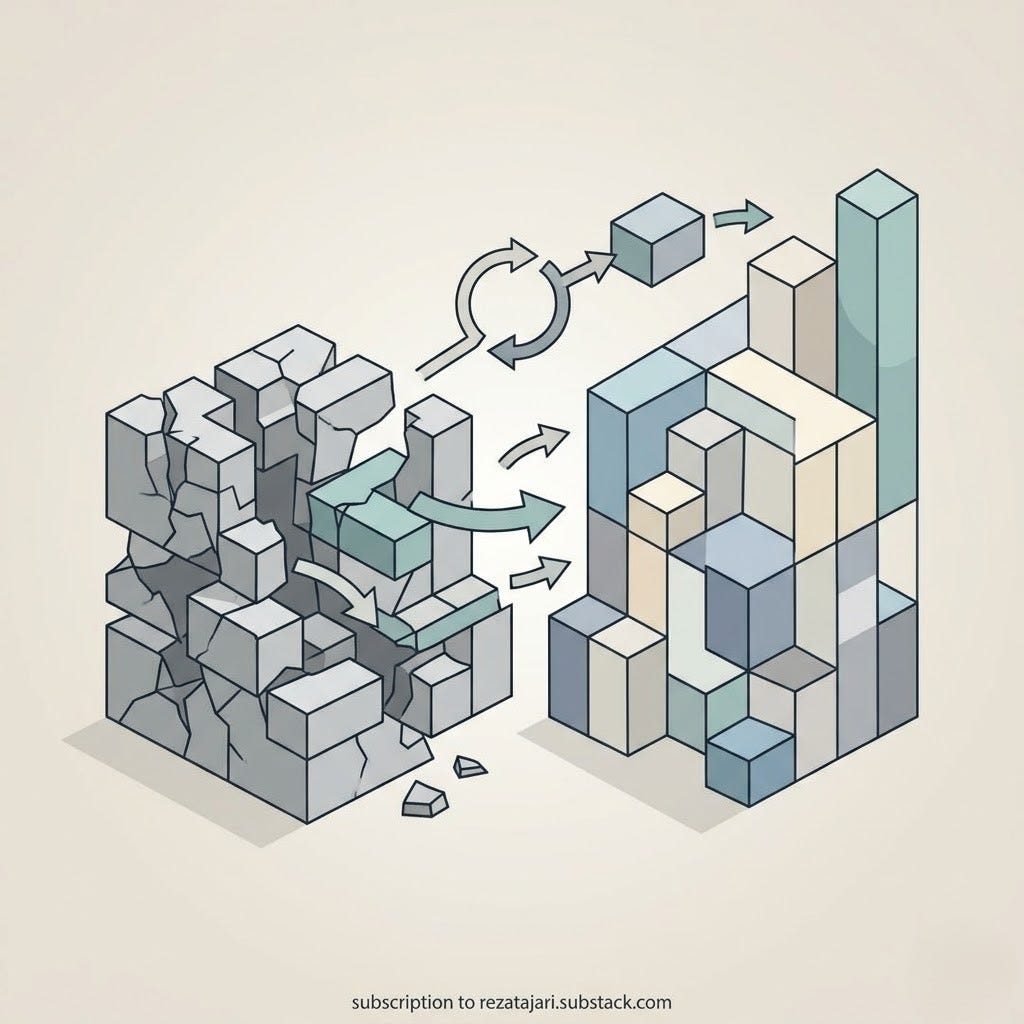
Failure is part of real engineering.
If nothing breaks →
you’re probably not pushing enough.
The goal isn’t avoiding failure.
It’s preventing repetition.
What a Good Postmortem Does
What happened? → detect earlier next time
Why? → fix root cause
Impact? → understand cost
What changes? → prevent repeat
What did we learn? → retain knowledge
When done right:
Failure stops being waste.
It becomes learning infrastructure.
Final Thought
You’re not just building software.
You’re working inside a human system.
And when that system works well
everything else becomes easier.
For more detailed notes every week, subscribe👉 rezatajari.substack.com